

2026 Voice AI Businesses: ElevenLabs Above $500M ARR, Suno Reports $300M
Company disclosures and a February 2026 report describe ElevenLabs voice-agent growth and Suno music subscriptions, with ARR, revenue, financing and valuation kept separate.

Customer-Service AI Agents: Sierra at $100M ARR and Decagon at Eight Figures
A reported comparison of Sierra and Decagon that keeps ARR, funding, valuation, and task completion separate.
Healthcare AI: Abridge Around $100M ARR and Ambience With $243M Funding
Sacra estimated Abridge at $100 million ARR in May 2025, while Ambience announced a $243 million Series C in July 2025. The figures describe distinct business milestones.
Legal AI: Harvey and Legora Both Reported Above $100M ARR
A reported comparison of Harvey and Legora that separates ARR, financing, valuation, customer count, and the workflow evidence behind legal AI contracts.
AI Search Routes: Glean at $300M ARR and Perplexity Around $100M ARR
A reported comparison of enterprise knowledge search and consumer answer products, with official ARR and media-reported ARR kept separate.
Bolt.new Went from About $0.7M to $20.7M ARR in Two Months, Its Founder Said
A reported account of StackBlitz’s pivot to Bolt.new, with founder-interview ARR figures clearly separated from Lovable’s company-reported milestone.
Cursor Reported Over $500M ARR in 2025; Cognition Reported a $492M Run Rate in 2026
A source-led account that keeps Cursor’s reported ARR separate from Cognition’s reported annualized revenue run rate, funding, and valuation.
AI Startup ARR Scorecard: Gamma at $100M, Lovable at $200M, Glean at $300M, and ElevenLabs Above $500M
A reported comparison of four AI startups whose public disclosures put them at very different ARR milestones, with revenue, profit, and funding kept separate.

HiddenLayer Says ARR Grew More Than 10x as AI Security Reached a $100M Series B
HiddenLayer announced a $100 million Series B after reporting more than 10x ARR growth, 50-plus new platform customers, and expanded runtime security for AI agents.
Respond.io Reported $35M ARR and 169% Growth for Its AI Customer Communications Platform
Respond.io said its AI customer communications platform reached $35 million in ARR, reported 169% year-over-year growth, and cited a 30% margin in a company press release.

Arena Reached a $100M Annualized Revenue Run Rate in Eight Months
Arena said its model-evaluation platform reached a $100 million annualized revenue run rate about eight months after launch, alongside large-scale usage and a new agent workflow.

Sierra Entered Year Three Above $150M ARR With Enterprise Customer Agents
Sierra said it entered its third year above $150 million in ARR after reaching $100 million in seven quarters and completing a first $50 million quarter.

Hightouch Added $70M in ARR in 20 Months With AI Marketing Workflows
Hightouch added $70 million in annual recurring revenue in 20 months after launching its AI marketing product, according to TechCrunch.
Warp Grew Revenue 150% in Months as Usage-Based AI Billing Reached 20%
Stripe reports that Warp grew revenue 150% from June to August 2024 after adopting usage-based billing, which represented about 20% of revenue. The case also says revenue grew 23 times that year.

VEED Reached $1M in ARR in Less Than a Year and Later Surpassed $45M
Stripe reports that VEED reached $1 million in annual recurring revenue in less than a year after integrating Billing. The page overview says the company later surpassed $45 million in ARR; its results section says that by June 2025 it had exceeded $40 million in ARR with nearly 200,000 paying subscribers. The case also reports $1.8 million in recovered payments in one year.
Replit Grew Annualized Revenue from $2.8M to $150M in Less Than a Year
Replit states that annualized revenue grew from $2.8 million to $150 million in less than a year, alongside a global community of more than 40 million users. These are company-reported run-rate and user figures, not audited revenue or profit.

Zhang Ao Built an AI Production Platform in Six Weeks; Client Reported RMB 40M Added Revenue in Three Months
A June 2026 Changjiang Daily report said Lingjing Engine spent six weeks building an AI production platform for a Shanghai short-drama company, whose revenue reportedly rose by RMB 40 million over the following three months. The figure is client-side, not Lingjing Engine revenue or profit, and was not independently audited.
Adithyan Ilangovan Built an AI-Assisted Podcast Service Reporting About $14.5K MRR
In a March 3, 2026 Indie Hackers interview, AI Podcasting founder Adithyan Ilangovan reported about $14,500 in monthly recurring revenue for a human-delivered podcast post-production service. The figure is founder-reported, unaudited, and not pure software revenue or profit.
Steven Goh Built NinjaPear in Two Weeks; June Gross Revenue Exceeded $15,000
The financial figure below comes from an Indie Hackers editorial interview published on July 7, 2026, and is attributed to Steven Goh. He said NinjaPear generated more than $15,000 in gross revenue in June 2026. This is gross revenue, not MRR, ARR, or profit, and it has not been independently audited.

Meerkats.ai Reached More Than $3K MRR Four Weeks After Launch
Indie Hackers reports that Meerkats.ai reached more than $3,000 in monthly recurring revenue about four weeks after launch. The figure comes from an editorial interview and the founder’s statements; it is not audited profit or pure software-subscription revenue.
Chipp.ai Billed 5.9 Billion LLM Tokens in Two Months and Lifted Revenue 20%
Stripe reports that Chipp.ai increased revenue by 20% in the first month after adopting usage-based billing and billed more than 5.9 billion tokens in its first two months. The case also reports that the company regained about 25% of operational capacity and could forecast a 30% profit margin.

Aryan Reached 250 Users and Reported $150 MRR for DeepReachAI
Aryan reported that DeepReachAI reached 250 users and $150 in monthly recurring revenue. The figures are founder-reported and were not independently audited.
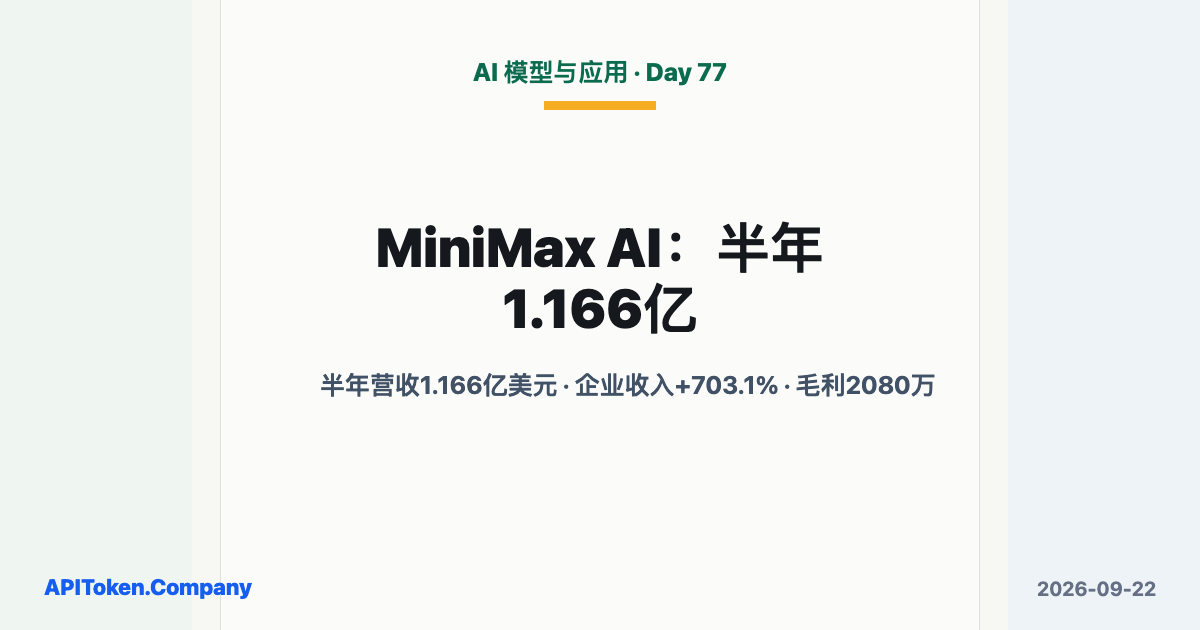
MiniMax Reported $116.6M Revenue in the First Half of 2026
MiniMax reported $116.6 million in first-half 2026 revenue, up 283.1% year over year. Enterprise revenue reached $73.9 million, up 703.1%, and gross profit reached $20.8 million.

Fuke AI Reached 20,000+ Merchants and Raised a Strategic A Round
Fuke AI states on its current company pages that more than 20,000 merchants use the product. Its history page records an April 2026 Series A strategic investment from Alibaba and a valuation in the hundreds of millions of RMB.

Manus Reached $90M Annualized Revenue Four Months After Paid Plans
Stripe reports that Manus reached $90 million in annualized revenue four months after launching paid plans and accepted payments in more than 200 countries within one month of launch.
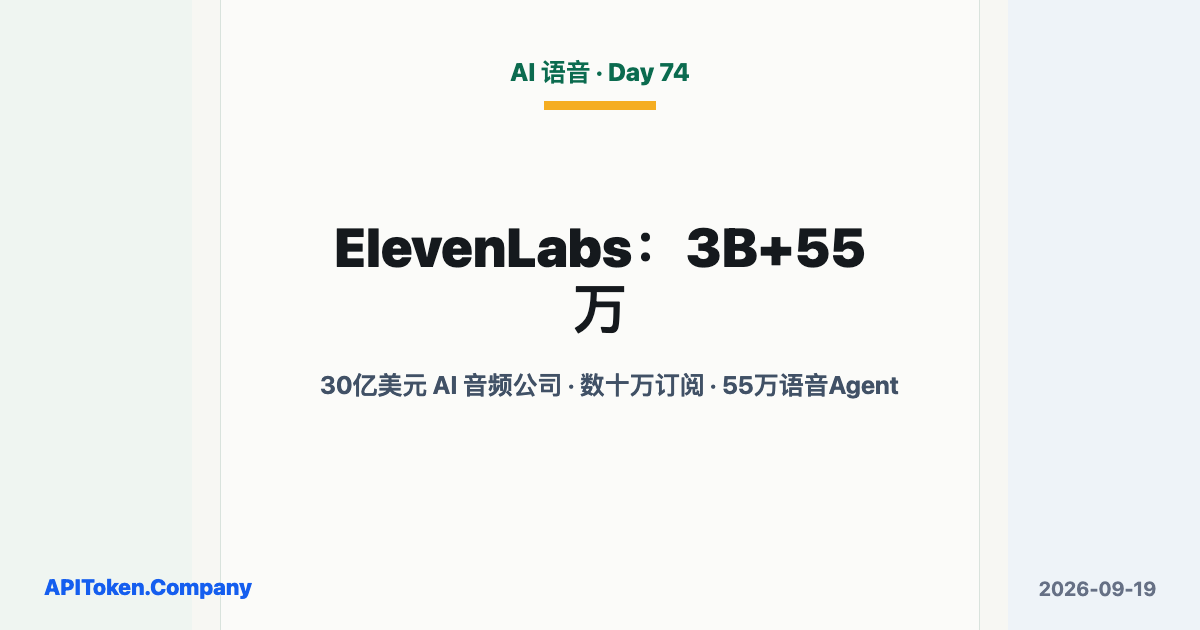
ElevenLabs Became a $3B AI Audio Company With 550,000 Agents Created
Stripe describes ElevenLabs as a $3 billion AI audio company with hundreds of thousands of subscribers, 5,000 voices in its library, and 550,000 conversational AI agents created on the platform.

Cursor Scaled to Billions in Recurring Revenue
Stripe reports billions of dollars in recurring revenue two years after launch. Stripe also reports that Smart Retries recovered 38.4% of failed payments for Cursor in 2024.

Higgsfield AI Exceeded a $200M Run Rate in Nine Months
Stripe reports that Higgsfield exceeded a $200 million run rate nine months after launch, with 75% of revenue coming from customers outside the United States.

Runpod Reached $120M ARR in Three Years With GPU Cloud
Stripe reports a $120 million revenue run rate three years after launch on Stripe. Runpod says users can deploy GPU workloads in under a minute, with usage-based infrastructure pricing.

Juicebox Raised $116M and Serves More Than 5,000 Businesses
Stripe reports $116 million in funding, more than 5,000 businesses on the platform, 20% month-over-month payment-volume growth, and $500,000 in recovered revenue.

Browserbase Bills More Than 100M Browser Minutes Each Month
Stripe reports more than 100 million browser session minutes billed each month. A free tier helped Browserbase increase active subscribers by 17% in one month while automated usage billing tracked consumption.
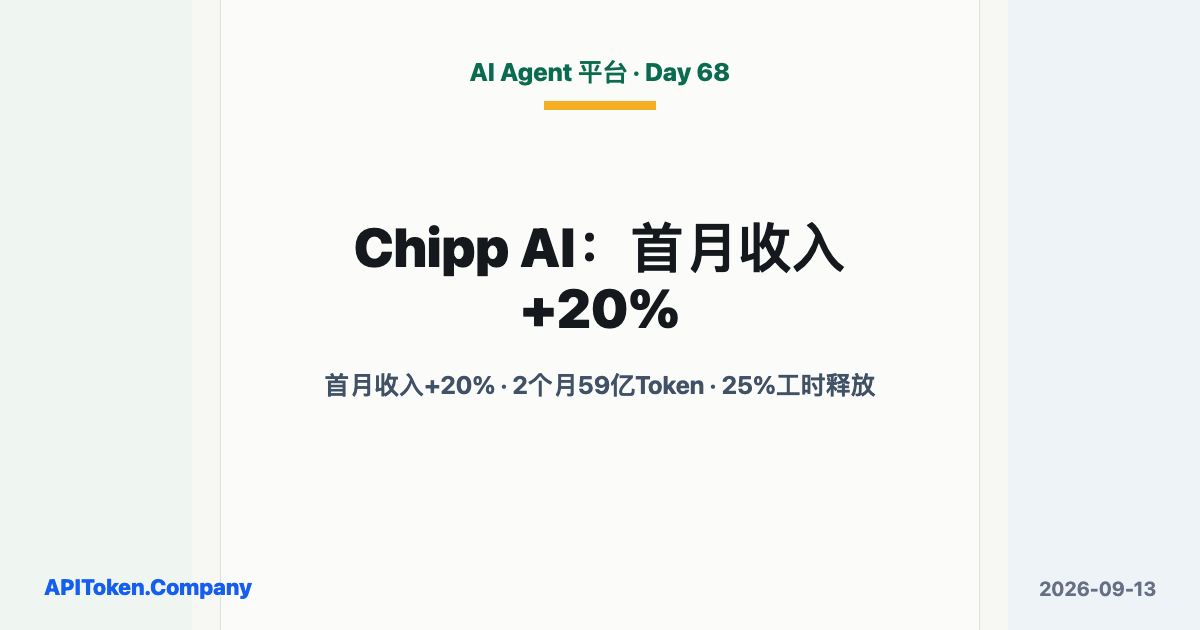
Chipp.ai Lifted Revenue 20% by Billing for LLM Tokens
Stripe reports a 20% revenue increase in the first month after Chipp.ai adopted token-based billing, more than 5.9 billion tokens billed in two months, and about 25% of team capacity recovered from manual invoicing.

Okara Passed $1M ARR Within Two Hours of Launch
Stripe reports that Okara launched globally from Singapore in March 2026, gained thousands of paying customers within weeks, and exceeded $1 million ARR within two hours of launch. Seventy percent of customers were based in the United States.

Arcads Reached Nearly $12M in Annual Revenue With AI Video
Stripe reports $4.2 million in 2024 revenue, more than 6,000 subscribers in 2025, and a projection above $13 million in 2025 revenue. The case says the company reached almost $12 million in annual revenue in under two years.
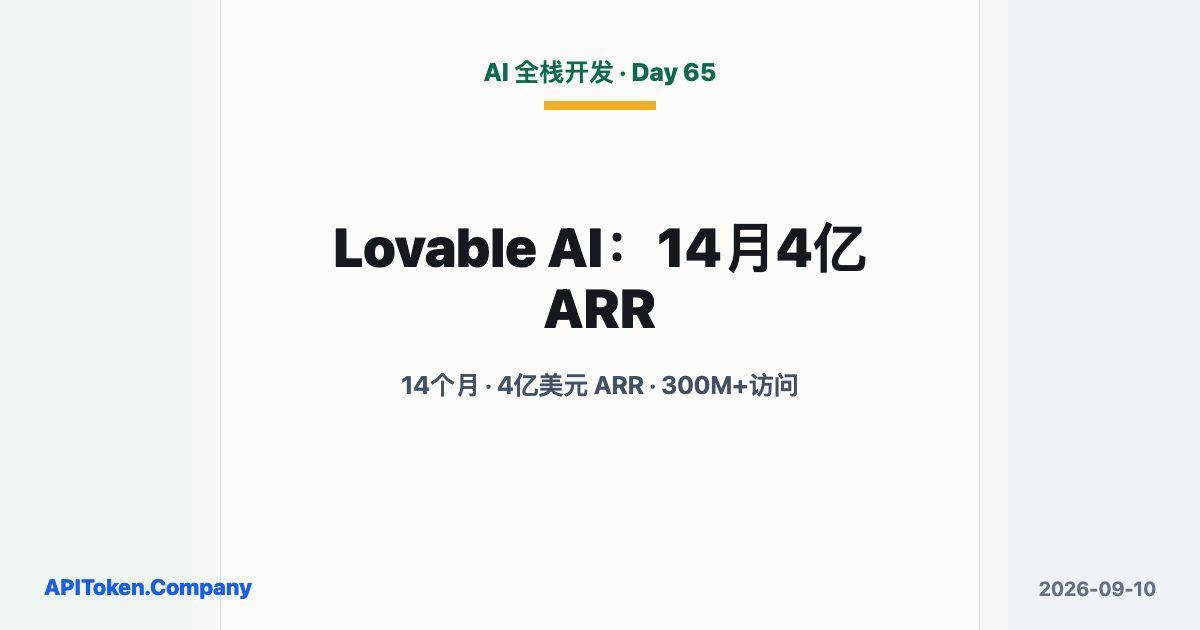
Lovable Reached $400M ARR in 14 Months With AI App Building
Stripe reports $400 million in ARR 14 months after launch, 4.6 million credits granted every month, and more than 300 million monthly visits to Lovable-built sites and apps.

Gamma Reached $100M ARR and 70M Users in Under Three Years
Stripe reports that Gamma reached $100 million in ARR and 70 million users in under three years; it passed $1 million ARR and became profitable within two months of launching subscriptions.

A Nanjing AI Product Course Produced 69 Projects Without Reported Revenue
A public report about 69 student AI and product projects, with no disclosed revenue result and a practical path from demo day to customer evidence.

An AI Coding RCT Found Experienced Open-Source Developers Slower
A 2025 randomized study about experienced open-source developers and AI coding tools, showing why a local baseline matters more than a model label.

A GitHub Study Reported Copilot Tasks Finished 55% Faster
A GitHub productivity study about a controlled coding task, with guidance for checking whether faster completion survives a real repository and review process.

Stripe Atlas Found AI-Native Solo Companies Nearly Doubled Revenue in Two Years
A Stripe Atlas aggregate study about AI-native solo companies, with a distinction between group-level revenue patterns and an individual founder's result.

A Non-Coder Built a Cat Light Prototype in About One Hour
A public report about a non-coder using AI coding tools to make a small pet-light prototype in about one hour, without turning speed into a revenue claim.

Three Young Makers Built Demumu in One Month With About RMB1,000 in Cost
A public media report about three young makers, a one-month build window, and development costs above RMB1,000 for a small AI tool.

A Student Founder Reported EUR15K MRR in Seven Months With an AI Sales Trainer
A team member self-reported about 260 paid users and EUR15,000 MRR for an AI sales-training product while finishing university.

A Solo SaaS Had $99 MRR After Six Months and 83% Churn
A creator-data SaaS founder self-reported six paid customers, five churned accounts, and about $99 MRR after six months.

An Indian Solo Founder Launched to 0 MRR: Stop Features and Ask for Payment
A founder self-report about a LinkedIn AI product with zero paying customers in its first week, focused on learning before more build effort.

An Architecture SaaS Founder Reported $8,600 MRR After Two Slow Years
A forum self-report about changing an architectural rendering product into a conversational workflow, with a careful distinction between MRR and personal income.

How Ordinary People Can Use AI Well: Can AI Save Justin Sun? Separate Fact From Narrative First
A skeptical workflow for testing confident AI advice with an opposing case, outside evidence, and a clear stop condition.

How Ordinary People Can Use AI Well: If AI Joined the Decision, Calculate the Downside First
A practical decision card for people considering a career, relationship, move, or large purchase, with three boundaries and one reversible test.

A Part-Time Builder Reported $393 in 45 Days With a LinkedIn AI Tool
A founder-reported early result from a LinkedIn creator tool, with a small paid test and a clear boundary between revenue evidence and a repeatable business.

How Ordinary People Can Use AI Well: Can AI Help With a High-Stakes Justin Sun Story?
A grounded guide to treating a user-supplied X post as unverified material and testing whether AI can identify broken evidence, irreversible costs, and a safer stopping point.

Twin Founders Built Emergent to a Self-Reported $120M ARR in 13 Months: Sell One Spreadsheet Workflow First
TechCrunch reported that Mukund and Madhav Jha founded AI application builder Emergent in June 2025. About 13 months later, the company reported $120 million in ARR and more than 200,000 paying customers. The figures are company-reported, not audited profit.

Marc Lou Sold $250K of ShipFast in Five Months: Package One Repeated Workflow First
Marc Lou's self-reported ShipFast sales show how repeated SaaS setup work can become a product, while keeping revenue claims and AI validation separate.

How AI Helped HeadshotPro Generate $50K a Month
How HeadshotPro turned AI-generated professional headshots, affiliate distribution, SEO, Stripe Checkout, and measurable delivery into a reported $50K+ monthly affiliate revenue channel.

Pieter Levels and PhotoAI: A Reported $105K Monthly Revenue, Starting With One Usable Result
Pieter Levels wrote on his personal site that PhotoAI made about $105K in monthly revenue and roughly $80K in monthly profit. The figures are founder-reported and unaudited. This case focuses on narrow product scope, distribution, image-delivery cost, and a bounded APIToken test.
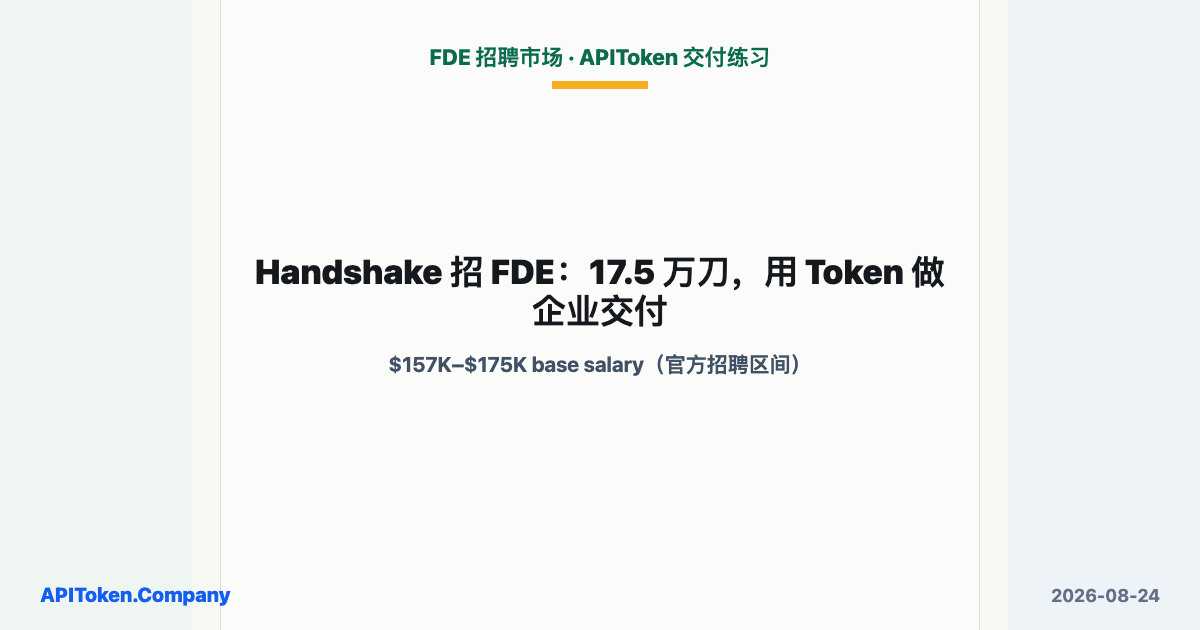
Handshake FDEs: A $175K Range, Then Token-Based Enterprise Delivery
Handshake FDEs place AI inside enterprise recruiting workflows and are judged by deployment quality and customer outcomes. The public compensation figure is a role range, not personal income. This article connects employment change, AI delivery, Token usage, and a bounded APIToken test.
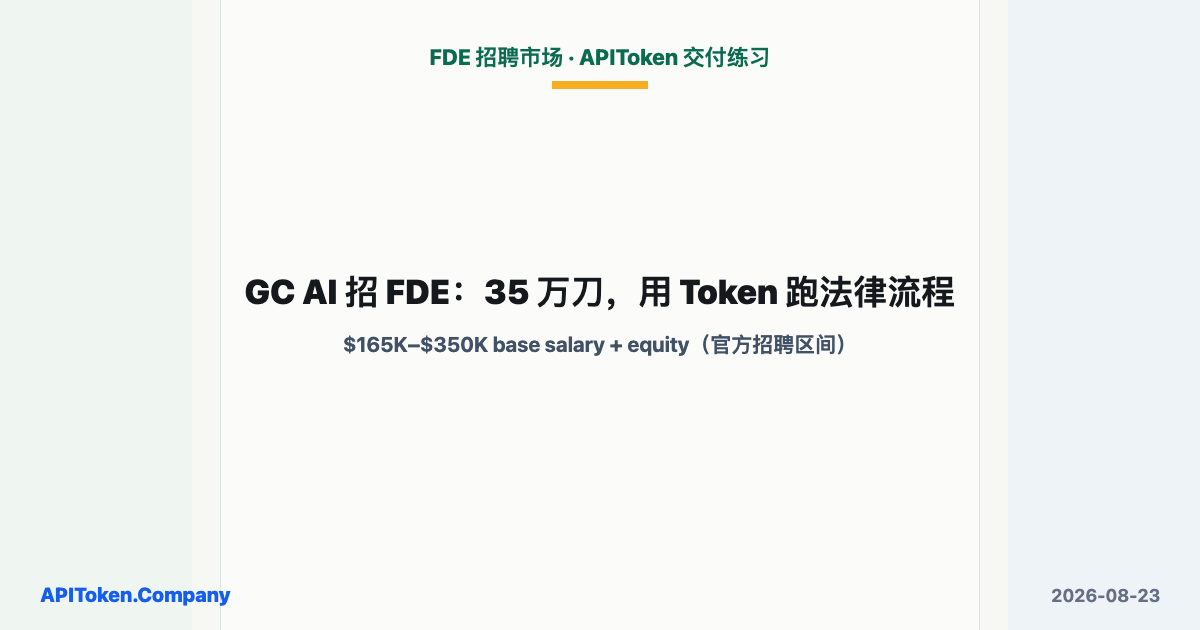
GC AI FDEs: A $350K Ceiling, Then Token-Based Legal Workflows
GC AI FDEs define early customer problems, prototype legal workflows, connect data and permissions, and turn field learning into product capability. The public compensation figure is a role range, not personal income. This article connects employment change, AI delivery, Token usage, and a bounded APIToken test.
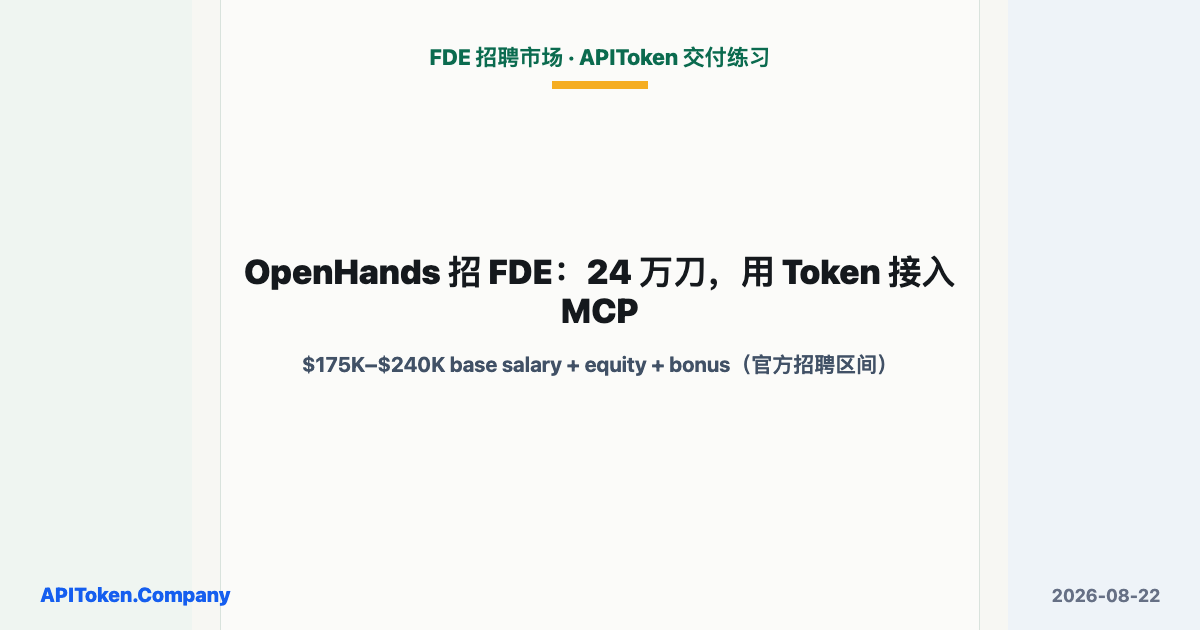
OpenHands FDEs: A $240K Range, Then Token-Based MCP Delivery
OpenHands FDEs install an AI coding platform in customer-managed infrastructure and handle identity, OAuth, connectors, and adoption. The public compensation figure is a role range, not personal income. This article connects employment change, AI delivery, Token usage, and a bounded APIToken test.
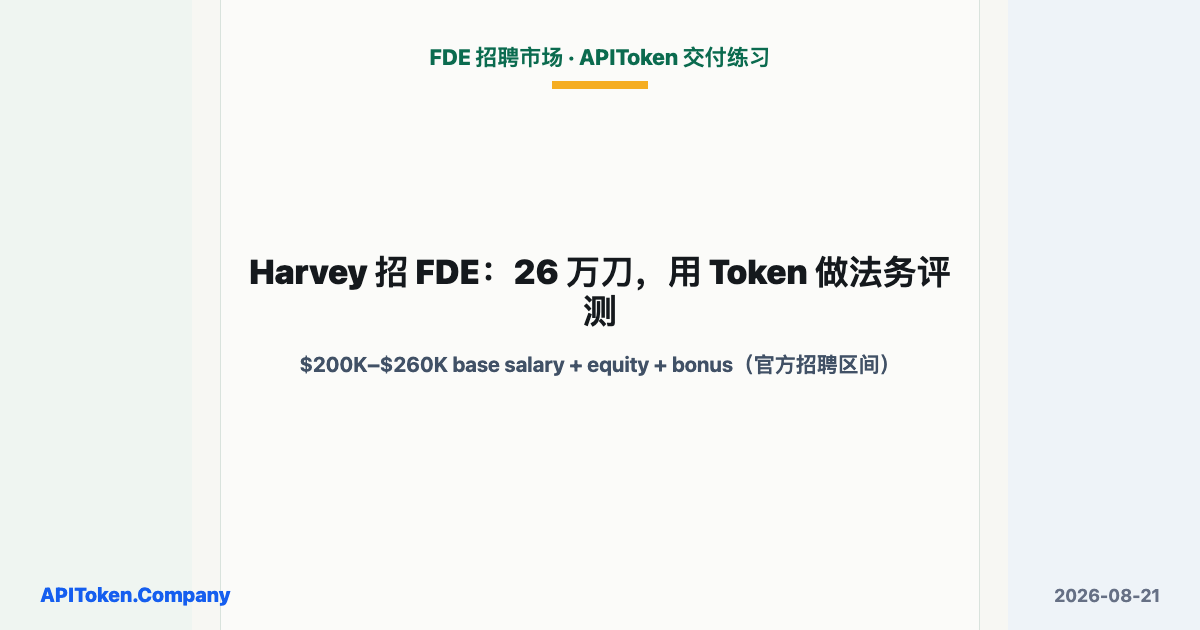
Harvey FDEs: A $260K Range, Then Token-Based Legal Evaluation
Harvey FDEs turn legal AI prototypes into auditable workflows with retrieval, guardrails, enterprise integrations, and adoption feedback. The public compensation figure is a role range, not personal income. This article connects employment change, AI delivery, Token usage, and a bounded APIToken test.
OpenAI FDEs: A $280K Range, Then Token-Based Production Evaluation
OpenAI FDEs take frontier-model work from discovery and system design to production rollout with customers. The public compensation figure is a role range, not personal income. This article connects employment change, AI delivery, Token usage, and a bounded APIToken test.

A No-Code Founder Tested 27 AI Tools, Spent a Self-Reported $2,300, and Still Had No Proven Income
Zakariae Jabel's Indie Hackers self-report says he tested 27 AI tools, spent $2,300 in tool costs, and kept only three workflows that saved time and money. The figure is an unverified trial cost, not revenue or profit.

A 12-Year-Old Built an AI Receptionist in Two Weeks, but Hundreds of Calls Still Produced $0 Paid Customers
B-grade media reports describe Mana Jampala, a 12-year-old who built an AI receptionist in two weeks and handled hundreds of calls while still seeking a first paying customer.

A 40-Year-Old No-Code Builder Found 16 Testers but $0 Revenue After a Year
A founder self-report describes a 40-year-old Norwegian digital strategist who built an AI accountability app with no coding background, found 16 free testers, and reported $0 revenue after a year.

He Gave an AI Agent $50: 43 Downloads on Day One Produced Just $3.55 in First Sales
In an Indie Hackers self-report, Benny Bowden gave an AI agent a $50 budget. Day one brought 43 downloads and one $3.55 payment. This is self-reported first sales revenue, not audited profit.

A Microsoft Architect Built a Job AI After Work: Jobric Reached a Reported $3.3K MRR Two Months After Charging
An Indie Hackers interview says Microsoft architect Erik Chavez built Jobric after work, tested it free first, and reached about $3,300 in MRR two months after charging. This is reported early recurring revenue, not audited profit.

After Five Years of Failures, Marc Lou Shipped 19 Products With Reported Annual Revenue of $1.3M
Indie Hackers material lists Marc Lou's product portfolio at about $1.3 million in annual revenue after more than five years of unsuccessful startup attempts and 19-plus launches. This is reported revenue, not audited profit.

After Building More Than 50 Apps, Ji Yucheng Used AI to Cut Development to Three Days and Reached Reported Monthly Revenue Near RMB 100,000
Economic Information Daily reported that Chinese independent developer Ji Yucheng built more than 50 apps, grew monthly revenue from several thousand yuan to nearly RMB 100,000, and cut a clearly defined app build from at least two weeks to three days with large-model tools.

After a Big-Tech Interview Rejection, Damon Chen Took Unpaid Leave and Built PDF.ai to Reported $500K Annual Revenue
Indie Hackers material says Damon Chen took unpaid leave after an unsuccessful big-tech interview and later built PDF.ai. The reported $500K figure is annual revenue, not audited profit.

Self-Described as Half-Blind, Daniel Nguyen Left a Year-Long Plateau and Built BoltAI to a Reported $30K Monthly Peak
Daniel Nguyen said KTool could not reach ramen profitability after another year. An Indie Hackers interview later reported BoltAI at $15K to $30K in monthly revenue, not audited profit.

After Dropping Out and Four Failed Startups, Jenni AI Escaped a Long Plateau and Reached a Reported $6.4M ARR
An Indie Hackers case says David Park endured four failed startups and about eighteen months near $2K monthly revenue before Jenni AI refocused on students and researchers and reached a reported $6.4M ARR.

A 24-Year-Old Founder Reached a Self-Reported $10K MRR in One Month, Then Faced 50% First-Month Churn
Bhanu Teja Pachipulusu reported that SiteGPT reached $10K MRR in one month. Case material also records roughly 50% first-month customer churn, showing why revenue and retention must be reviewed together.

Two Failed AI Attempts, a Five-Day Launch, and a Self-Reported $22K in Sales by Day 11
Tony Dinh described TypingMind as his third AI product attempt. He shipped the first version five days after an API launch and later reported $22K in one-time sales by day 11, not audited profit.

A Non-Technical Creator Built an Audio AI Tool in Half a Day and Later Reported $20K Monthly Revenue
Louis Pereira turned a half-day hackathon prototype into AudioPen. An Indie Hackers interview later described roughly $15K to $20K in monthly revenue after two years of iteration, not audited profit.

A Paternity-Leave AI Tool Reached a Reported $500K ARR, but Virality First Cost $5,000
Formula Bot began as a one-week paternity-leave MVP. Interviews later reported $500K ARR, while an overnight traffic spike first created roughly $4,000 to $5,000 in API costs.

A 9-to-5 Developer Self-Reported $393 From an AI Side Project in 45 Days
A developer with a full-time job self-reported 65 signups and $393 from a LinkedIn creator tool in about six weeks. Test one narrow paid result with a small budget before risking your main income.

AI-Native Solo Companies Earn More on Average, But the Top Still Pulls 61 Times Ahead
Stripe Atlas data says AI-native solo companies approach twice the two-year revenue of other solo companies, while the top decile is 61 times ahead of the median. Test one narrow B2B result before buying more tools.

Graduating While Building: A Founder Self-Reported €15K MRR AI Sales Trainer in Seven Months
A team member reported about 260 paying users and €15,000 MRR after seven months of an AI voice sales-training product. The practical lesson is to serve a narrow customer segment with bounded model tests.

An AI Product Launched to Zero Customers: Validate the Paid Result Before Adding Models
An Indian solo founder reported zero paying users and zero MRR after launching a LinkedIn AI writing tool. Use interviews, one workflow, isolated keys, usage records, and a bounded budget before adding more models.

A Day Job, Two Years at $150 a Month, and a Self-Reported $8.6K MRR Pivot
A full-time worker's architectural rendering side project reportedly stayed near $150 a month for two years before a simpler customer-facing workflow reached self-reported $8.6K MRR. The figure is not audited.

No Game Development Background, a Three-Hour AI Prototype, and a Reported $38.4K per Month
Pieter Levels built a playable browser flight simulator prototype in three hours. The reported revenue is not a repeatable promise; copy the one-day prototype, one paid test, and controlled model budget.

A 19-Year-Old Waiter Gained Only 200 Followers in Six Months. Start With 10 Similar Users
A research-based case says Farid Shukurov turned his own audience-growth problem into SupaBird and reported more than $2,000 per month. Start by validating one narrow pain with ten similar users.

A 32-Year-Old Freelancer Turned Design Work Into a $6.2K MRR AI Tool
An Indie Hackers case study says Rishi Mohan moved from side projects to a solo AI content tool at $6.2K MRR. Start by selling one repeated deliverable to five users.

A Student Missed a Return Offer, Then Built a $10M ARR AI Business
Chatbase founder Yasser Elsaid missed a return offer in his final university year, then narrowed an AI idea to one customer-support problem. Learn how to test ten questions before expanding.

A Graduate Student Nearly Sent a Real Resume to AI. Start With One Sanitized Sample
A graduate student almost sends a resume containing names, contact details, and internal project references to an AI test. Build one sanitized sample before the first request.

A Product Manager Paid to Try Three AI Models. Why Could They Still Not Choose?
A product manager spends trial budget on three impressive AI demos but still cannot choose. Compare the same task, usage, failures, and human editing time instead.
Three People Share One API Key: Why No One Can Trace the Failure
A small-team workflow for separating API keys, permissions, budgets, and usage records by project so incidents can be traced and old credentials can be revoked.

One Night of Retries, Still No Deliverable: Why Batch APIs Need a Status Check First
A practical batch-start checklist using public channel status, an isolated API key, one minimal real request, usage records, and a hard budget circuit breaker.

Why Did a Small Team's AI Bill Suddenly Double? Count Requests, Retries, and Human Work
A practical way for small teams to calculate the full cost of one deliverable using an isolated API key, usage records, retry limits, editing time, and a hard budget boundary.

From 30 AI Models to 3: Run One Minimal Real Test Before Integration
A practical model-selection workflow that uses current status, isolated API keys, one sanitized task, usage records, and a hard budget boundary to reduce a long list to three testable candidates.

After a Layoff at 35, Replace the ‘Breakthrough’ Goal With One 14-Day Project
An explicitly hypothetical restart plan for people under financial pressure: choose one visible project, cap the experiment budget, protect data, and decide whether to continue from evidence.

A Cheap Shared AI Account Can Cost More Than a Subscription
A practical student scenario showing why shared AI accounts create privacy, access, and continuity risks, and how isolated API keys support safer low-cost model testing.

Eight Hours, Zero Results: Why an AI Retry Loop Needs a Budget
A practical failure scenario for developers and small teams: separate retryable errors, set a request and spending budget, add circuit breakers, and keep recovery observable.

69 AI Projects in One Course: What Student Founders Should Validate Before They Scale
A practical guide for students turning AI-assisted prototypes into testable products with real problems, small budgets, isolated API keys, model comparisons, and clear stopping conditions.

50 Billion Views for Handmade Creation: How Small Businesses Can Test AI Without Losing Control
A practical look at China's handcraft economy and how makers and small businesses can use AI to test one product, reduce content workload, compare models, and control total experiment cost.

From Banking and an MBA to a Seven-Figure AI Tool: Four Lessons From Stanley
A grounded Stanley case study about validating demand before coding, testing one user path, measuring total AI cost, and keeping keys, budgets, logs, and fallback routes under control.

Photo AI at $105K a Month and 17.9M Headshots: Why Narrow AI Products Win
A practical Photo AI and HeadshotPro case study about choosing one narrow image outcome, testing several models on the same samples, and controlling cost and data risk.

6 Months, $80M, and 250k Users: What Base44 Actually Teaches Independent Developers
A solo-founder case study showing why the real lesson is validation order, hidden iteration cost, fallback routing, and a smaller first-week experiment.

48-Hour Legacy System Delivery: Validate Claude Code With a 20-Minute Sample First
A practical Claude Code delivery checklist covering small-task validation, channel status, isolated API keys, budget limits, usage logs, and fallback models.

Testing a New Model in Codex on a Budget: Check Price, Status, and API Key Control First
A low-cost Codex model testing workflow using a small task, public channel status, isolated API keys, usage logs, and comparable budgets.

Common API Integration Pitfalls in Coding Assistants Like Codex and Claude Code
Troubleshoot coding assistant API integrations by checking the active provider, Base URL, model name, API key permissions, channel status, and one minimal real call.

GPT-5.6 Sol, Terra, and Luna on APIToken: A Practical Codex API Testing Workflow
A practical workflow for checking GPT-5.6 Sol, Terra, and Luna model visibility, API key permissions, channel status, usage, and Codex desktop configuration.

Why Third-Party API Configuration Fails: Base URL, API Key, and Model Name Explained
Fix OpenAI-compatible API configuration errors by aligning the Base URL, API key, model name, group permissions, balance, endpoint type, and channel status.

How Small Teams Can Control API Costs Across Multiple AI Tools
A practical API cost management framework for small teams using separate keys, usage logs, model pricing, channel status, test budgets, and project isolation.

Claude Fable 5 Access Extended to July 12: Build a Reusable API Workflow
Use a limited model-access window to validate a reusable API workflow with a Base URL, isolated API key, model name, usage logs, channel status, and fallback model.