
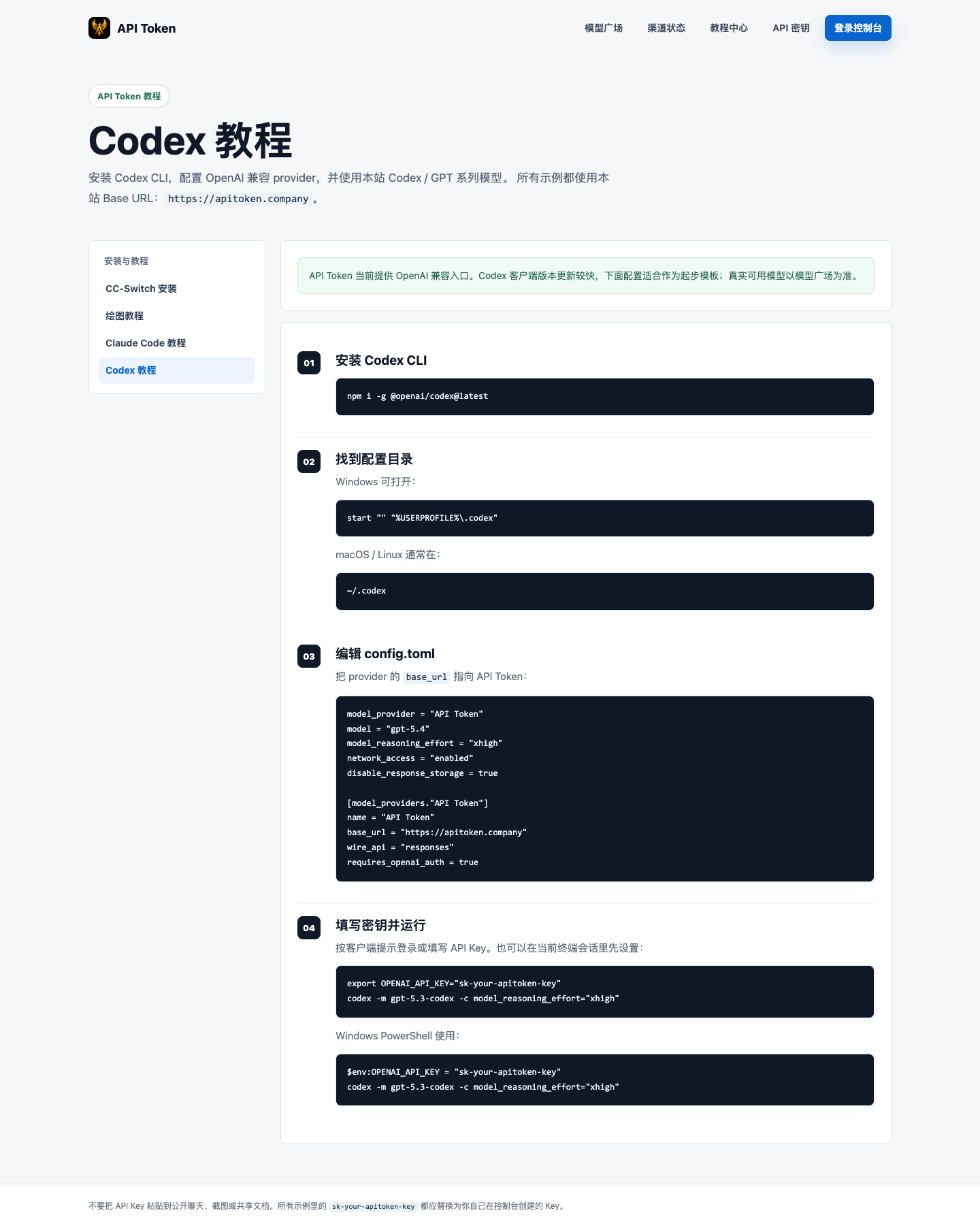
Confirm which provider is actually active
Codex, Claude Code, Cline, and similar tools can read files, modify projects, run commands, and call different model services. They may also have several configuration layers: command-line flags, environment variables, local files, and graphical settings.
Before changing a model, confirm which configuration file and provider the client loaded. A correct value in an inactive file cannot affect the request, and restarting the client may be required after a provider change.
Match the Base URL and endpoint type to the client
Some clients require a complete OpenAI-compatible Base URL, while others append an API version automatically. Clients may also distinguish between OpenAI and Anthropic request formats. Duplicating or omitting a path is a common source of 404 and authentication errors.
Use the current tutorial for the specific client, then verify the effective request address. Do not combine an old guide, another provider's endpoint, and a new client template.
Treat model visibility and real availability as different checks
A model name shown in a marketplace or returned by a models endpoint may still be unavailable to the current key, group, or endpoint type. Confirm the exact model name, group permission, account balance, and supported protocol.
Then run one short, low-cost request. A minimal real call gives stronger evidence than a visible model list and makes later failures easier to reproduce.
Use a fixed troubleshooting order
Check the active provider, Base URL, API key integrity, model name, group permissions, balance, and public channel status in that order. Only after those checks should you increase task size or grant broader tool access.
Give each coding assistant or project a dedicated key and review its usage logs. This separates service incidents, local configuration errors, model permissions, and runaway tasks into problems that can be acted on independently.